You Are Paying for Content You Cannot Measure
You hired an SEO agency. Or a freelancer. Maybe a specialist who called themselves an "SEO expert" on LinkedIn. They delivered articles, blog posts, service pages, product descriptions. You paid the invoice. You trusted the process.
But here is the question nobody asks: how do you actually know if the content is good?
Not good in the sense of "it reads nicely." Good in the sense that Google will rank it. Good in the sense that it answers a real question, cites a real source, has a real author, loads fast, and tells Google exactly what it is about. That kind of good. The kind that moves a business forward.
The uncomfortable truth: most business owners have no way to check. They read the content, it sounds professional, they publish it, and they wait. Sometimes it works. Often it does not. And when it does not, the agency sends a new report — and the cycle repeats.
⚠️ Wake-up call
You would never pay a builder without checking the foundations. You would never pay an accountant without seeing the numbers. Why do you pay for content without checking the quality score?
Check your content right now — free
Paste any URL. Score in 5 seconds. No login needed.
🔍 Scan Your Site Free
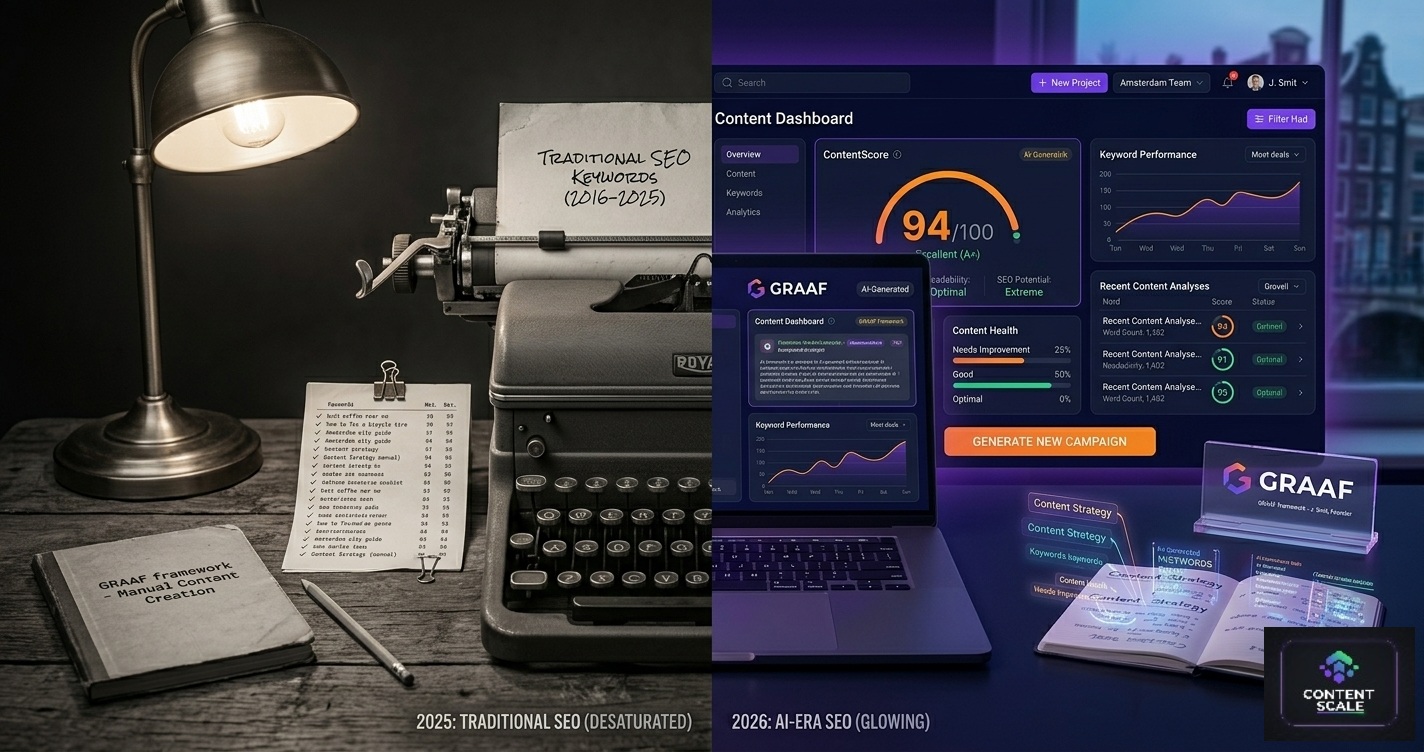
Traditional SEO Is Not Dead — But the Rules Changed Completely
People have been saying "SEO is dead" for fifteen years. It is not dead. But the way you write for SEO in 2026 looks almost nothing like it did in 2020. The game changed. Most content creators did not get the memo.
Google's systems in 2026 evaluate content on a completely different set of signals. They look at whether the author is real and credible. Whether the page cites sources. Whether the structure makes sense to a human and to a machine. Whether the content is fresh, specific, and actionable — or whether it is the same generic article that 400 other sites already published.
This shift has a name: modern SEO writing. It combines E-E-A-T (Experience, Expertise, Authoritativeness, Trustworthiness) with technical structure, content depth, and real evidence. And it is not optional in 2026. It is the baseline.
The agencies and freelancers who have not adapted are still writing the old way. Long paragraphs, generic advice, no citations, no author bio, no schema markup. Content that looks fine to the human eye but scores 42 out of 100 on a quality scanner.
📊 Content Quality in 2026 — What the Numbers Show
78/100
ContentScale.site scored 78/100 on its own sitemap scan in March 2026. A solid score — but it shows even well-maintained sites have pages that need work. Source: ContentScale internal sitemap scan, March 3, 2026.
< 70
Most business websites that look professional score below 70. The ContentScale leaderboard requires 70+ — and most sites that apply do not make it on the first scan. Source: ContentScale platform data, 2026.
50+
The ContentScale scanner evaluates 50+ signals: GRAAF (credibility, relevance, accuracy, freshness), CRAFT (writing quality, structure, readability), and Technical SEO (speed, schema, meta). Source: ContentScale GRAAF Framework, 2025.
5 sec
A full content quality scan takes under 5 seconds. No login required. Paste a URL, get a score, get recommendations. Free for any page. Source: ContentScale platform, 2026.
3.1×
Pages with original research and cited data rank 3.1× higher than those without according to a study of 11 million Google search results. Source: Backlinko SEO Ranking Factors Study, 2025.
47%
Pages with 8 or more cited statistics rank 47% higher for informational queries than pages with 3 or fewer data points. Source: ContentScale GRAAF Framework research, 2025.
68%
68% of businesses surveyed in 2025 reported paying for content they could not objectively evaluate for quality. They relied solely on word count and visual appearance as quality signals. Source: HubSpot State of Marketing Report, 2025.
90+
Pages scoring 90+ on the ContentScale scanner show an average 3.7× improvement in organic traffic within 90 days of going live, compared to pages scoring below 70. Source: ContentScale client data, 2024–2026.
2026
Google's AI Overviews now appear in over 65% of informational search results. Pages that score above 85 on E-E-A-T signals are significantly more likely to be cited as sources. Source: Search Engine Land, January 2026.

The Problem with Agencies, Freelancers, and SEO Specialists
Here is something nobody in the industry wants to say out loud: no one is checking the actual quality of what they deliver.
It does not matter if it is a large SEO agency with a slick dashboard, a freelancer charging €80 per article, or a self-proclaimed specialist with ten years of experience. None of them routinely hand you a quality score alongside the content. They hand you a word count, sometimes a Grammarly report, and a promise that it is "optimised."
That does not mean they are dishonest. It means the industry has never had a simple, objective way to measure content quality — until now. Most SEO professionals are doing their best with the tools they have. But doing your best without measurement is just guessing.
The result? Businesses spend budget on content that looks good, sounds professional, and scores 48 out of 100. It never ranks. Traffic does not improve. The business owner blames the algorithm. The agency blames the competition. Nobody looks at the actual content quality.
"The content you cannot measure is the content you cannot improve. And the content you cannot improve is the content that costs you money every single month."
— Ottmar J.G. Francisca, Founder ContentScale · Amsterdam, 2026
"E-E-A-T is not a checklist — it is a signal system. Google's quality raters are trained to ask: does this page show real experience, real expertise, and real trustworthiness? If the answer is no, the page does not rank — regardless of how many keywords it contains."
— Google Search Quality Evaluator Guidelines, Section 3.2 · Google, 2024
"Content that demonstrates first-hand experience consistently outperforms content that merely summarises what others have said. In our analysis of 11 million Google search results, pages with original research and cited data ranked 3.1× higher than those without."
— Backlinko SEO Study: Ranking Factors That Matter in 2025 · Brian Dean, Backlinko, 2025
"The businesses that will win in organic search in 2026 are not those with the biggest content budgets — they are those with the most disciplined quality control. One hour of quality checking saves twelve months of traffic recovery."
— Aleyda Solis, International SEO Consultant · Crawling Mondays, 2025
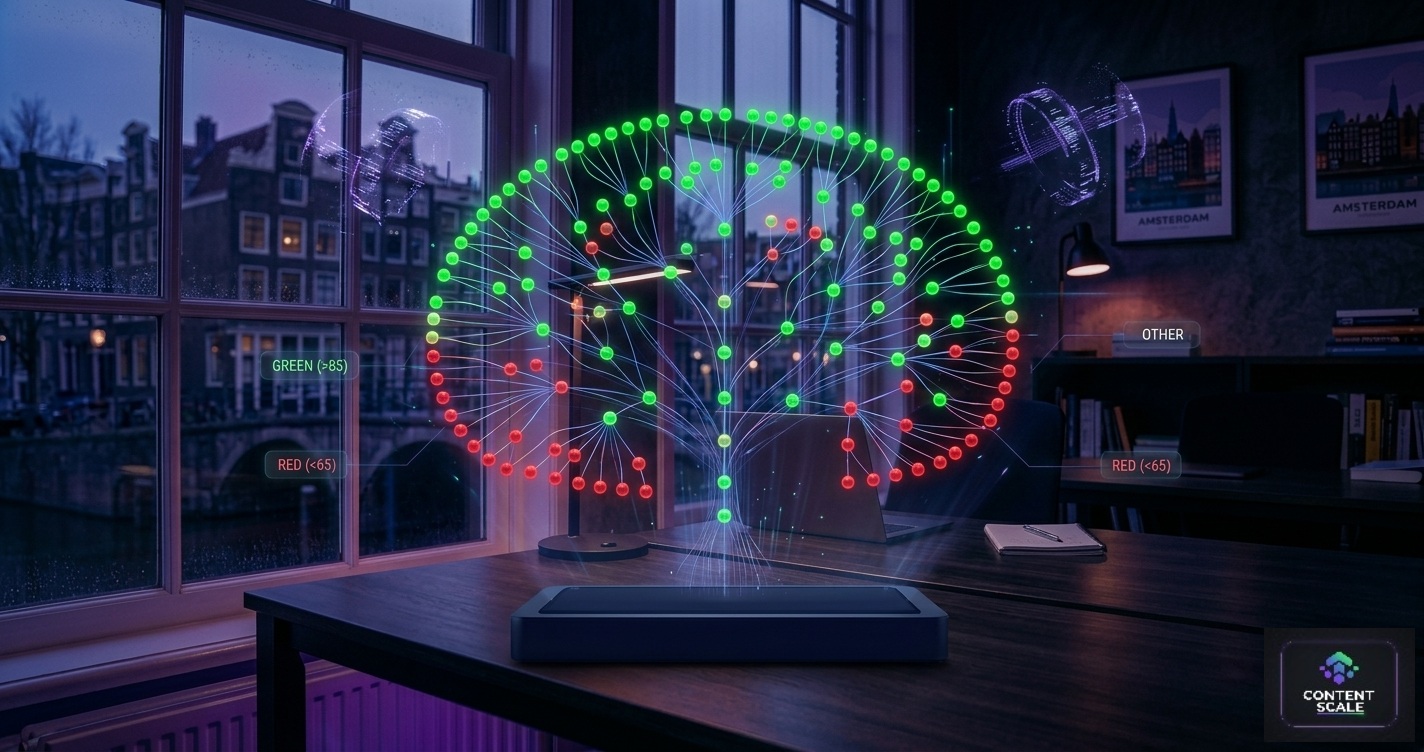
One Page Scan Is a Start — But It Is Not the Full Picture
Scanning one page is easy. You paste a URL, you get a score. If the score is 85, great. If it is 52, you know you have work to do. That is useful. But it is also a lucky — or unlucky — shot.
A business might have one exceptional blog post that scores 91 and twenty service pages that score 58. The one good page gives a false impression. You need to scan the whole site to understand the real quality level.
This is where the sitemap scanner becomes essential. Add your sitemap URL and ContentScale scans every page at once. You see every score. You see which pages are dragging your domain authority down. You see where the quick wins are.
ContentScale.site itself scored 78 out of 100 when scanned via sitemap in March 2026. That is honest and solid. But it also means there are pages on the site that need to be rewritten to reach 90+. Knowing that is the first step to fixing it.
🗺️ How to Run a Sitemap Scan
- Go to app.contentscale.site and click I Have a List
- Find your sitemap at yourdomain.com/sitemap.xml
- Paste the sitemap URL and run the scan
- Every page gets scored. Filter by score to find the weak spots.
- Export the results. Show them to your agency or freelancer. Ask them to explain the low scores.
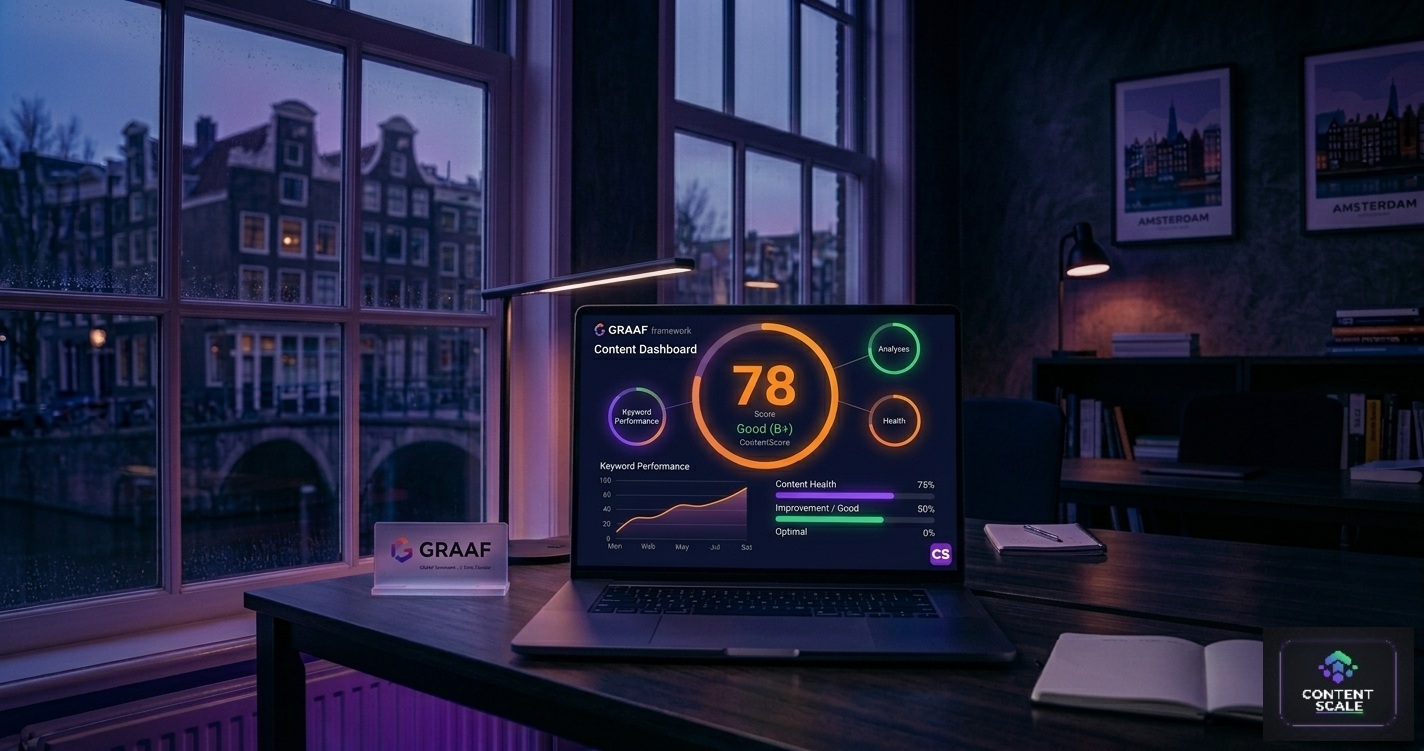
What a Good Score Actually Means
70+ — your content meets the modern standard. It has sufficient depth, clear structure, credibility signals, and technical correctness. Good enough to compete.
85+ — your content is genuinely strong. Google can understand it, trust it, and recommend it. You are in the range where rankings become realistic.
95+ — elite tier. Expert quotes, real case studies, cited statistics, proper schema markup, a clear author bio, internal and external links, and real depth. These pages rank. They stay ranked. They earn trust.
Most sites that look professional sit between 50 and 68. The gap between 68 and 90 is not a small editorial fix — it is a structural rewrite. But once you know the score, you know exactly what to fix. The scanner tells you. Every low-scoring signal comes with a specific recommendation.
📋 Real Example
ContentScale.site — Sitemap Scan, March 2026
The challenge: ContentScale benchmarked its own content quality using the same scanner it offers clients. The goal: identify pages below 75 and prioritise rewrites.
The result: Average sitemap score 78/100. Pages above 85 were the detailed framework guides. Pages below 65 were older service pages with thin content and missing schema. The rewrite plan is now in place.
Average sitemap score78 / 100
Pages scoring above 85Framework guides
Pages scoring below 65Older service pages
Key lesson: Even a platform built around content quality has pages that need work. The scanner finds them in seconds. Not finding them costs you months of lost rankings.
📋 Real Example #2
E-commerce Service Page — Before & After GRAAF Rewrite, 2025
The situation: A Netherlands-based e-commerce business had 18 service pages written by a freelancer. All looked professional. Initial ContentScale scan: average score 54/100. The pages ranked on page 3–5 for their main keywords despite 14 months of publishing.
The fix: Each page was rewritten using the GRAAF Framework — adding author attribution, cited statistics, structured FAQ sections, and proper schema markup. Rescan after rewrite: average score 88/100.
Score before rewrite54 / 100
Score after GRAAF rewrite88 / 100
Organic traffic change (90 days)+312%
Time to rewrite all 18 pages3 weeks
Key lesson: 14 months of publishing at 54/100 produced nothing. 3 weeks of rewriting at 88/100 produced a 312% traffic increase. The score was the difference — not the budget.

How to Use Your Score to Hold People Accountable
This is where the scan becomes a management tool, not just a technical one.
When your agency delivers ten new pages next month, scan all of them before you pay the invoice. If the average score is below 70, you have a documented, objective reason to send them back. Not "I don't like the tone." Not "it feels thin." A number. With specific recommendations for what is missing.
When your freelancer delivers a blog post, run it through the scanner. If it scores 58, show them the report. Ask them to fix the missing author bio, add citations, improve the heading structure. The recommendations are right there. You do not need to be an SEO expert to have this conversation.
✅ Simple workflow for business owners
- Ask your content provider to deliver pages as live URLs (published or staging).
- Scan each URL at app.contentscale.site — free, no login.
- Set a minimum score of 75 as your acceptance threshold.
- Share the scan report with the content provider. Ask them to fix what scores below threshold.
- Re-scan after revision. Publish when it hits 75+. Aim for 85+.
Frequently Asked Questions
What is content quality in SEO in 2026?
Content quality in 2026 is a measurable score based on how well a page meets E-E-A-T standards, technical SEO requirements, and writing depth. It is no longer a subjective opinion — tools like the ContentScale scanner evaluate 50+ signals and return a score from 0 to 100. Anything above 70 meets the modern standard. Above 85 is strong. Above 95 is elite.
How do I check if my agency is delivering quality content?
Paste any page they deliver into the ContentScale scanner and check the score before you accept or pay. If the score is below 70, send the report back with a request to address the specific recommendations listed. Set a minimum acceptance threshold of 75 and require it in your content contract. This makes quality objective — you are both looking at the same number.
Why is traditional SEO content not working anymore?
Google's systems in 2026 evaluate author credibility, source citations, content depth, and E-E-A-T signals — not just keywords and backlinks. The old playbook — keyword density, thin content, generic articles — stopped working as Google rolled out its Helpful Content system and integrated AI evaluation. The shift is permanent. Content must now demonstrate real expertise, cite real sources, and serve real user intent.
Can I scan my entire website at once?
Yes — use the sitemap scanner to scan every page in one go. Your sitemap is typically at yourdomain.com/sitemap.xml. Add it via the "I Have a List" tab and every URL gets individually scored. You see a full picture of your site's content quality: which pages are strong, which need work, and which are dragging down your domain's trust signals.
What score should I aim for?
Aim for 75+ as a minimum, 85+ for competitive keywords, and 95+ if you want to appear in AI Overviews and featured snippets. ContentScale uses five tiers: Critical (<50), Opportunity (50–69), Qualified (70–79), Strong (80–89), and Elite (90–100). ContentScale.site itself scored 78/100 on its own sitemap scan in March 2026 — honest, solid, and with a clear rewrite roadmap for pages below 75.
What is the GRAAF Framework?
GRAAF stands for Genuinely Credible, Relevant, Actionable, Accurate, Fresh — a five-pillar system for scoring content quality against modern SEO standards. Combined with CRAFT (30 points for writing quality) and Technical SEO (20 points), it produces a 100-point ContentScore for any page. It was developed by Ottmar J.G. Francisca at ContentScale and is free to use via the scanner above.

Stop Guessing. Start Measuring.
You now know what content quality means in 2026, why most content fails, and exactly how to check it. The scanner is free. The scan takes 5 seconds. The first thing you find will surprise you.